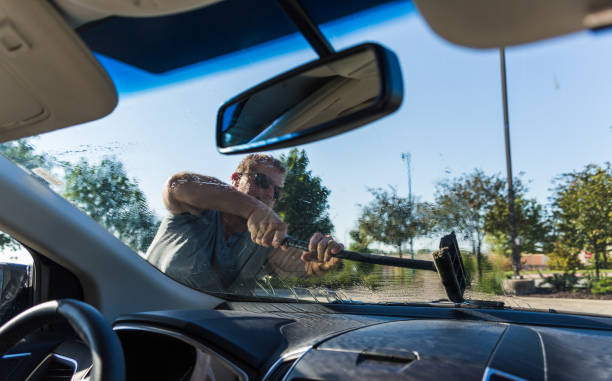

Windshield scratches are easy to ignore until sunlight or approaching headlights hit the glass at the wrong angle. Suddenly, a thin mark that seemed almost invisible becomes a bright line directly in your field of vision. Some minor scratches can be improved or even removed, but deeper damage requires a more cautious approach.
The first step is determining whether you are dealing with a scratch or a crack. A scratch affects the surface of the glass, while a crack extends into its structure. Cracks, chips and impact damage should not be treated with polishing methods intended for superficial scratches.
A simple way to assess a scratch is to gently run a fingernail across it. If your nail barely catches or does not catch at all, the damage may be superficial enough for polishing. If the nail catches noticeably, the scratch is probably deeper and attempting to polish it aggressively can create additional problems.
Before doing anything else, clean the windshield thoroughly. Dirt and tiny particles can look like scratches, and polishing contaminated glass can actually create new marks. Wash the surface with an appropriate automotive glass cleaner and a clean microfiber cloth.
Light scratches are sometimes caused by worn windshield wipers. Small pieces of dirt trapped under the rubber can repeatedly travel across the same area, gradually marking the glass. Before repairing the scratch, inspect the blades and replace them if they are damaged, hardened or excessively worn. Otherwise, the same problem may simply return.
For very fine surface scratches, specialized glass-polishing compounds containing cerium oxide are commonly used. Unlike ordinary household cleaners, these products are designed for polishing glass. The compound is worked carefully over the affected area according to its instructions.
This is where patience matters. Windshield glass should not be aggressively polished in one small spot for a prolonged period. Excessive friction generates heat, and removing too much material can create optical distortion. A windshield that technically has fewer scratches but distorts the road ahead is not an improvement.
Deep scratches are different. Trying to completely polish away a significant groove means removing enough surrounding glass to reach the bottom of the scratch. This can alter the surface and potentially create visible distortion. If a scratch is deep, long or directly in the driver’s critical viewing area, professional assessment is usually the better option.
Be particularly cautious with improvised internet remedies. Toothpaste, baking soda and various household products are frequently suggested as DIY solutions. They may appear to improve extremely fine marks temporarily, but automotive glass is not a surface on which uncontrolled abrasive experiments are particularly sensible.
The cost of professional polishing should also be compared with the condition of the windshield as a whole. If the glass already has several chips, deep scratches and significant wear, investing time and money in correcting one small area may not make sense. As with decisions involving investments or cryptocurrency, focusing on one attractive number while ignoring the larger picture can lead to a poor decision.
It is also important to determine why the scratch appeared. Worn wipers are an obvious cause, but improper ice scrapers, dirty cleaning equipment and abrasive materials can also damage glass. Even repeatedly wiping a dusty windshield with a dry cloth can produce fine surface marks over time.
Modern windshields may also be associated with cameras and sensors used by driver-assistance systems. If damage eventually makes replacement necessary, the vehicle may require additional procedures such as camera calibration. This is another reason not to treat windshield replacement as simply swapping one piece of glass for another.
Minor surface scratches can often be improved, but the goal should always be better visibility rather than achieving cosmetically perfect glass at any cost. Clean the windshield first, identify the depth of the damage and use only products intended for automotive glass. If the scratch is deep or located directly in your main field of vision, professional evaluation is the safer approach.
Sometimes the smartest windshield repair is knowing when to stop polishing.