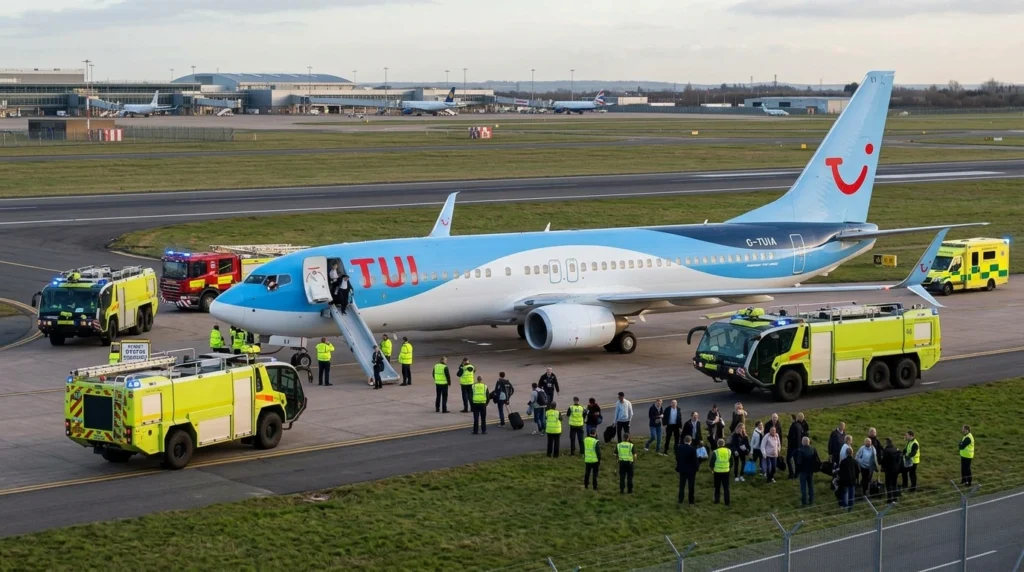

On September 28, 2025, TUI Airways flight BY6754 made an emergency landing after experiencing a technical issue shortly after takeoff. This incident captured widespread attention, with many wondering what led to the emergency and how the passengers were affected. In this article, we will provide a complete breakdown of the event, including its causes, timeline, and the safety measures taken by the airline.
Overview of TUI Flight BY6754
Background of the Flight
TUI Flight BY6754 was a scheduled passenger flight departing from Cardiff Airport (CWL) in Wales, heading towards Paphos (PFO), Cyprus. The flight was operated by a Boeing 737-800 aircraft, registered G-TAWY. The aircraft took off from Cardiff at approximately 10:30 AM, but soon after departure, an emergency situation arose, prompting the crew to make the decision to divert the flight to Birmingham Airport (BHX).
Aircraft and Route Details
- Aircraft Model: Boeing 737-800
- Registration: G-TAWY
- Departure: Cardiff Airport (CWL)
- Destination: Paphos International Airport (PFO)
- Emergency Landing Location: Birmingham Airport (BHX)
What Happened During the Emergency Landing?
Timeline of Events
- Takeoff: TUI Flight BY6754 departs from Cardiff Airport at 10:30 AM.
- Emergency Declaration: Shortly after takeoff, the flight crew declared an emergency at 10:40 AM.
- Holding Pattern: The aircraft circled over the Birmingham area for 30 minutes to burn off excess fuel.
- Diversion to Birmingham: At approximately 11:10 AM, the aircraft made its diversion to Birmingham Airport.
- Landing: The aircraft landed safely at Birmingham Airport at 11:20 AM with emergency services on standby.
- Passenger Disembarkation: Passengers were safely evacuated, and no injuries were reported.
Pilot Response and Decision-Making
The decision to declare an emergency was made by the pilot after the crew identified potential technical issues that required immediate attention. This decision followed established emergency protocols, including notifying air traffic control, preparing for a diversion, and ensuring passenger safety through clear communication and timely action.
Possible Causes Behind the Incident
Technical Issues
Initial reports indicated that the flight experienced a bird strike shortly after takeoff, which led to engine performance concerns. However, TUI Airways later confirmed that there was no engine failure and that the landing was precautionary to ensure the safety of the passengers and crew.
Medical Emergencies or External Factors
While medical emergencies on board were not reported, external factors such as weather conditions and the bird strike were pivotal in the pilot’s decision-making process. Bird strikes are a known hazard to aviation, often resulting in diversions or emergency landings to ensure the aircraft’s safety.
Passenger Experience During the Incident
Cabin Crew Role and Communication
The cabin crew played a vital role in maintaining order and communication during the incident. They ensured that passengers remained calm, providing clear instructions as the aircraft made its emergency landing. The crew’s professionalism helped manage the situation smoothly.
Passenger Reactions and Safety Measures
Many passengers reported feeling anxious during the event, especially when the aircraft was circling over Birmingham for an extended period. However, the clear communication from the crew and the quick action taken by the pilot reassured passengers, and the emergency landing occurred without incident.
Aviation Safety Standards and Emergency Protocols
How Airlines Prepare for Emergencies
Airlines, including TUI Airways, adhere to stringent safety protocols for handling in-flight emergencies. Pilots undergo rigorous training for emergency scenarios, and aircraft are equipped with advanced safety systems that allow for controlled landings during incidents like bird strikes.
Why Emergency Landings Are Often Safe
Emergency landings are a routine part of aviation and are typically executed with a high degree of safety. The presence of experienced pilots, skilled cabin crew, and modern aircraft technology ensures that even in emergency situations, the likelihood of harm to passengers is minimal.
Lessons Learned from the Incident
Importance of Preparedness
The incident highlights the importance of being prepared for unexpected events in aviation. Proper training for crew members, clear communication with passengers, and swift decision-making are critical to ensuring the safety of everyone on board.
Building Passenger Confidence
While emergency situations are rare, they serve to reinforce the importance of aviation safety standards. Passengers should feel confident knowing that airlines are equipped to handle emergencies efficiently and effectively.
For more reviews about digital products visit our review page
FAQs
What caused the TUI flight BY6754 emergency landing?
The emergency landing was caused by a bird strike that occurred shortly after takeoff. However, TUI Airways confirmed that there was no engine failure, and the landing was precautionary.
Was anyone injured during the incident?
No injuries were reported during the emergency landing. Passengers disembarked safely at Birmingham Airport.
How common are emergency landings?
Emergency landings are not common but are a standard safety procedure. In most cases, they occur as a precautionary measure, ensuring the safety of passengers and crew.
What should passengers do during an emergency landing?
Passengers should remain calm, follow crew instructions, keep their seatbelt fastened, and assume the brace position if instructed. Listening to the crew’s directions is vital for ensuring personal safety.
Are emergency landings dangerous?
No, emergency landings are generally not dangerous. Airlines have strict protocols in place, and pilots are trained to handle such situations efficiently, ensuring the safety of everyone on board.
How do pilots decide to make an emergency landing?
Pilots decide to make an emergency landing based on factors such as technical issues, passenger safety, and aircraft performance. The decision is made using a combination of training, experience, and established emergency protocols.
Conclusion
The emergency landing of TUI Flight BY6754 was a precautionary measure taken to ensure the safety of passengers following a bird strike shortly after takeoff. With the quick response from the pilot, cabin crew, and emergency services, the incident ended without injury, reinforcing the importance of aviation safety standards and preparedness.